Losing our language? Here's a rebellion (Versingforms Art Exhibition)
Public poetry, calligraphy, city space, and book art as a separate art form. People often think of art as a finished product, yet there also are all the street dialogues and the traditional printing trays. This exhibition of mine was a sort of a test: Can visual forms make peopl see text and language differently?
ARTMY EXPERIENCEEUROPE
Antos Sivyh
1/26/202613 min read
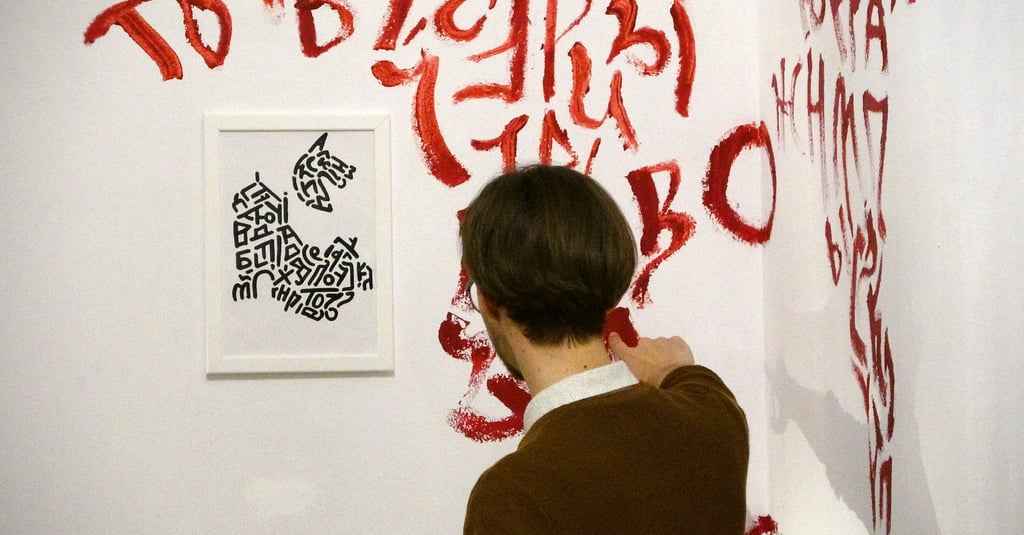
Poetry is not just about words. It is a way of seeing and experiencing the world. I am Antos, an artist and inventor, and I explore this through verse forms. Does every text have a visual form? When I write poems letter by letter, poems that I love from all over the world, graphic visual forms start to appear. This calligraphy style opens a new definition of poetry. It shows what poetry can be in the 21st century. It starts a new cultural dialogue and new conversations. And it literally starts each day when I go out on the street and start doing it. This is where experimental poetry becomes a visual and spatial experience.
Forms in central Poland
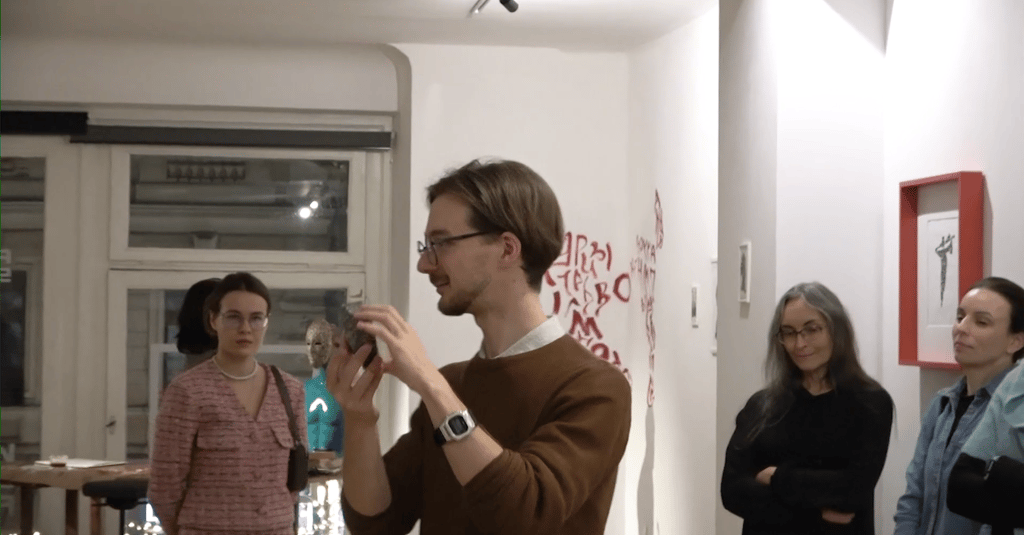
This is my first solo exhibition, Forms, in central Poland. I will walk you through it and explore these works. I will tell you the inspirations and the stories behind them. I will share the stories of the poems themselves. I will also share how these works were created. And I will talk about the idea of versing forms overall. I hope you have a pleasant time here, and let’s start. This is how contemporary 21st-century poetry looks and lives in real space. This is one of my exhibitions in Poland, and I am glad you are here.
I write in the city to start a dialogue
I often write verse forms on streets and in public places to spark a dialogue. I want talks between different people and between different cultures. Those are always very different kinds of talks and dialogues. This year I made a series of seven events in different cities on different topics. But all of them were joined by this idea of seeing the world in a new way. Seeing our culture and our technology in a new light. This is public art to me. These are gentle street interventions. These are urban poetic installations in the city space.
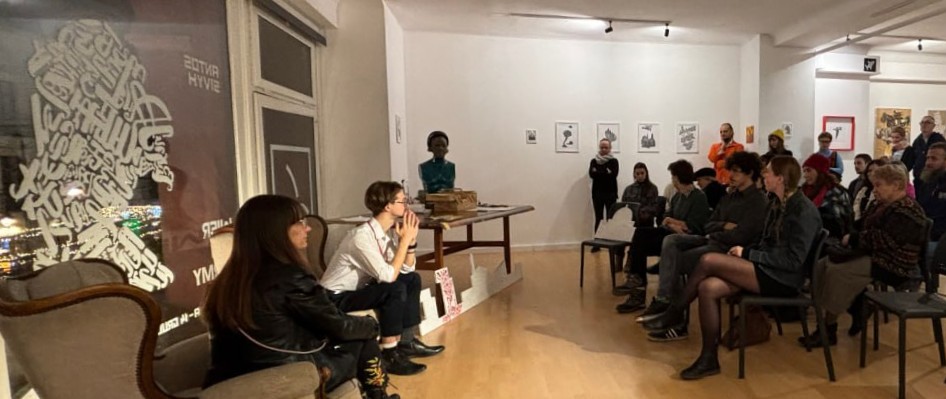
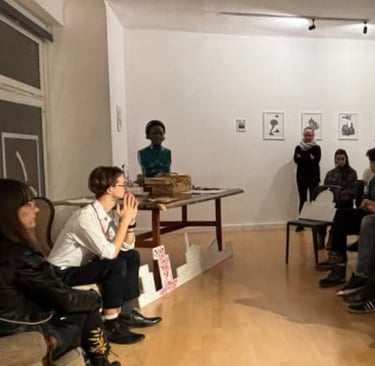
Seven events, one idea
I took poetry into travel, into neighborhoods, and into public squares. Each event tried a new angle. But I kept the same question. How can poetry move in space and time? How can handwritten text carry a city’s voice?


The exhibition starts here: three known verse forms
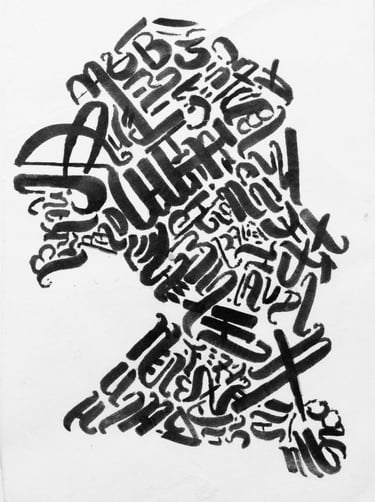
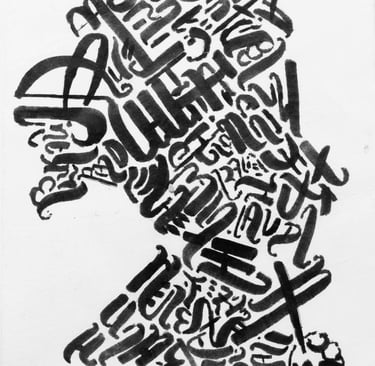
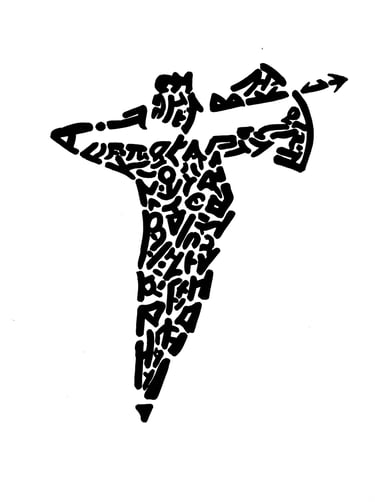
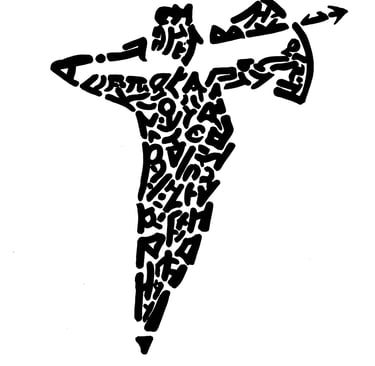
The exhibition starts here, where you find three of the known verse forms. The first one is Allen Ginsberg’s “A Supermarket in California.” This verse form can remind you of many things. For some people it looks like an angel if we turn it side by side. For some people it looks like a portrait. For some people it looks like a portrait of two people. Two people who are in this poem: the poet himself and Walt Whitman.
Allen Ginsberg, “A Supermarket in California”: https://en.wikipedia.org/wiki/A_Supermarket_in_California
Where versing forms began
This is the point where I started to experiment with form. I stopped making only spontaneous and very emotional pieces. I wanted more than intuition. The idea of the verse form started in Vilnius in 2019. I made poetry shows, wrote a lot, read a lot, and discussed poetry. I started to see several problems with the way we read literature today. I wanted to explore new dimensions of how poetry can be. I wanted to see what it can achieve. I wanted it to spark discussion in our time.
Calligraphy turned text into image
The way for me to do it was calligraphy. I looked at how handwriting can turn texts into something else. Into images like you see at this exhibition. Into visual calligraphy that breathes and moves. Into poetry as a visual and spatial experience.
Learning and looking, then writing
I studied media and communication in Vilnius between 2017 and 2019. I looked at film, cinematography, and journalism. I had friends who were designers. They did a lot of graphical work. They had courses on calligraphy. There I saw that calligraphy is not just technique. It is not only about writing things in a beautiful way. It can be expressive. It can be inventive. Writing does not have to be line by line by line, technically accurate. It can be alive. It can be interdisciplinary art. It can connect literature, film, design, and public space.
The first versingforms
The first verse forms were quite expressive. The idea was simple. I took a traditional metal ink pen. I dipped it in ink. I started covering all the paper with letters. Letter by letter, word by word. It was colorful and expressive. It did not have a strict shape yet. The name versing form comes from that time, from 2018.
Leaving forms in public places
An important idea was to leave those versing forms in public places. I left them at libraries, book crossings, and bookstores. I tucked them between pages so people would find them. People would look at them and turn them. On those turnings, they could read. They could experience what this poetry is. I often explained there what form means.
BookCrossing: https://en.wikipedia.org/wiki/BookCrossing
That is why I have few works from that early period. Most of them were left and found somewhere in Vilnius, Lithuania. I have only a few of them. Most are here at this exhibition, and you can view them. You can literally read word by word.

Language of choice and cultural identity
It is written in Belarusian Latin. The Belarusian language is endangered. It is also a language of choice. People choose to speak Belarusian. I chose to speak Belarusian when I was 13. For me it was reclaiming my culture. It was finding it in a new, fresh light I did not see before. It led me to history, poetry, and culture. It took me to new countries and to the world.
Belarusian Latin (Łacinka): https://en.wikipedia.org/wiki/%C5%81acinka
Studying in Vilnius, a very historical city, made this all connect. Lithuanians, Poles, Belarusians, and other nations meet there. It was the best place to start doing these forms. This is how cultural identity enters the work.
Film, city, and where you stand
For more than a dozen years I have been making films. Now I have a video production in Łódź, Poland. We made many short films and documentaries about place and culture. This street where the exhibition takes place is Piotrkowska Street. It is a central street of this city. You see it through a poem now.
On this street you can find our films playing in three or four companies. They rotate day and night. People view them there. My work connects poetry with film. It connects the screen with the wall. It connects reading with walking.
Five parts of the exhibition
The exhibition is divided into five parts. Each part looks at a different thread.
City and place
I create in streets and public places. Here is a series both made in those places and about those places. City space is not a backdrop. It is a page. This is public art in motion.
Travel
Travel is important for my work. Many versing forms were made while traveling. The poems often touch travel too. Moving changes the way letters move. It shifts how a line breathes.
Materials found
I love to find materials on the streets. The best materials are often found objects. Things from building sites. Boards left on sidewalks. A section of a wall once abandoned. I took it and made a piece. This is material experimentation. The city gives you paper and weight.
Experiments overall
Some versing forms are not typical. I made them for events. I made translations into Belarusian, like a Brodsky poem made for a request. The piece meets the event. The event asks for a form. The form answers.
Joseph Brodsky: https://en.wikipedia.org/wiki/Joseph_Brodsky
Printing and evolution
There is also an experiment with printing. One poem from the main section was turned into a print. You can see the evolution from spontaneous works to a printed logic. The hand meets the press. This is book art made from breath and ink.
Book art (artists’ books): https://en.wikipedia.org/wiki/Artists%27_books
Moving forms: animations
Open this cabinet and you find several versing form animations. I work in film and animation, including stop motion. So I tried to create moving forms. The running form uses a poem called “I Am 18.” What form do you see here? The poem runs. The letters chase the image. The image becomes a verse. Animation makes the page breathe.
Stop motion: https://en.wikipedia.org/wiki/Stop_motion
Animation: https://en.wikipedia.org/wiki/Animation
Montażownia: the editing table
The most recent one I created here. It sits in a space called Montażownia. Meronia is an editing table. I edit a lot of films, and I use this editing logic in writing. Think about the logic of language and of handwriting. Think about how text functions. Writing and poetry connect ideas. They connect the dots. They connect visuals and feelings.
This editing table helps find how versing forms can create a story. People who came to the opening and to later events made stories with these miniatures. You could play with this. I should make an interactive online version of this game. You could create a story by connecting visual imagery. This is the artistic process in public view.
Existential works: simple forms, big weight
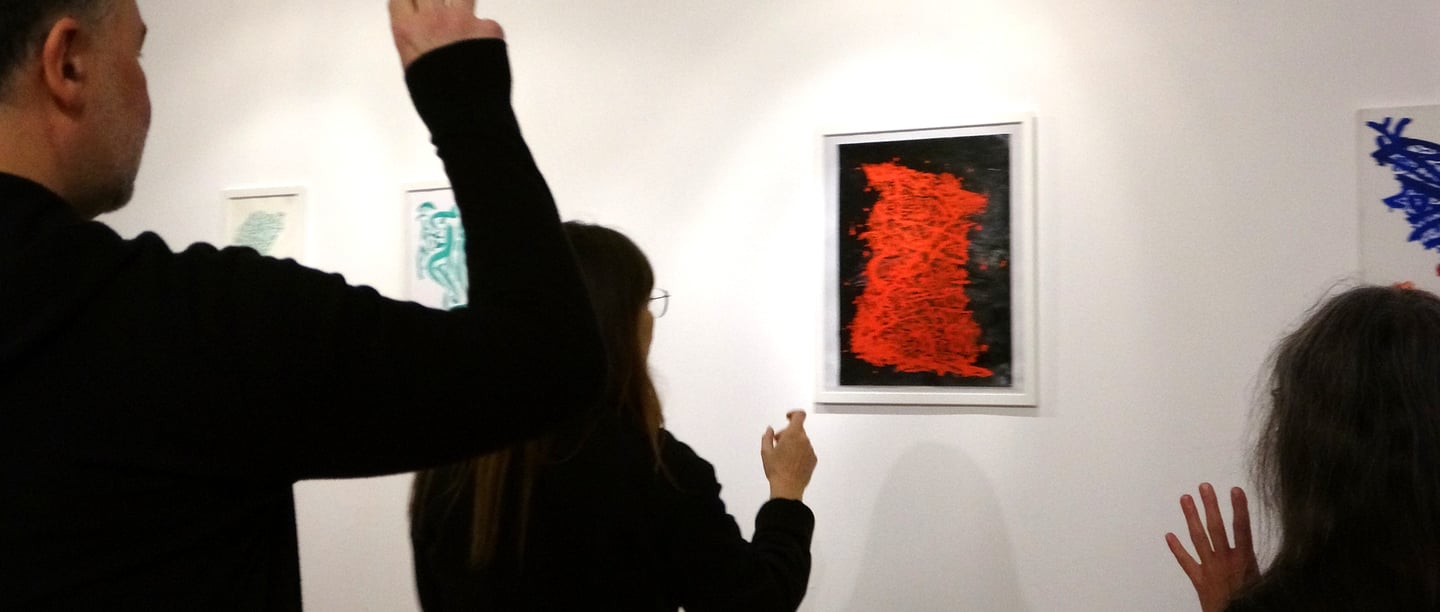
There is another point here. Some of the most existential works sit in this corner. They are tied to serious poems and topics I find important. They are unusual for me too. They look simple and readable. But they carry heavy questions.
What you see here is the whole first chapter of John from the Bible. Every word, every letter of the Belarusian translation is here. You know this chapter: in the beginning was the Word. The Word was with God. The Word was God. The piece treats scripture as image and as rhythm.
Gospel of John: https://en.wikipedia.org/wiki/Gospel_of_John
This section starts with The Chase, or Pahonia, or Pogoń in Polish. It is a classical Belarusian poem by Maksim Bahdanovič. It is well known and very personal to me.
Pahonia (poem): https://en.wikipedia.org/wiki/Pahonia_(poem)
What you see is like a gate. At the beginning of the poem he recalls a gate in Vilnius with the emblem of the Chase. This emblem is famous in medieval history. It is also an emblem of my country and my culture. I tried to walk out of the frame and onto the wall. I created a mural that continues the lines of the poem. It is also like an opened book. You can see the first side and the second side.
City and place continued
This section continues with works about city and place. One was created just here, near this tree. It sits on a modern poem called “Like Light Light.” Another is not urban. It is “The Forest” by Anatol Sys, a modernist poet of the 80s and 90s. He was unusual for his time. The city breathes in one. The forest breathes in the other.
Anatol Sys: https://en.wikipedia.org/wiki/Anatol_Sys (if unavailable, see Belarusian literature)
Belarusian literature: https://en.wikipedia.org/wiki/Belarusian_literature
Books, libraries, and what I carry
All of the books and poems are here. Many I brought from home. Some I borrowed from libraries. I am always a reader at local libraries. I pick books there and read for months. Then I return them. Then I pick the next set. Libraries are part of my city map. They are places of quiet, but also of movement.
I want to talk more about how I use libraries in the city. I want to share how you can use libraries better. Write a comment and I will make a tutorial about this. It is important.
Many poems I carry with me day to day. Because of that, some books are in poor condition. Charles Baudelaire was one of my top choices for years. He lives both in my bag and in my calligraphy lines.
Language of choice, and translation
Experiencing poetry is simpler in my native language. Belarusian is my language of choice. Even when I read in Russian, Polish, English, or Lithuanian, it is harder. It is easier when I pick a book of translations into Belarusian.
Those zines on the table matter to me. They hold original poems and translations: from Polish, from English, from French. Many were not available before. Some translations were found underground. Some were song adaptations few people knew. Some we translated ourselves. Many translations are mine. I am not a professional poetry translator. But I still believe that experiencing poetry through translation can be better. Better than reading in a language you do understand but that is not your own.
These zines let you compare. You can read and explore authors from ancient times to modern times. Some poems were written a year or two ago. This is how translation opens city space and inner space. This is translation as a public art tool.
I also attached a link where you can compare poems and their versing forms. You can find those on my blog when I post updates: https://sivyh.com/blog
A riverside gallery
There is also a riverside gallery, which is not on my land. Here you have Barcelona and Lisbon poems. Fernando Pessoa is here too, in translation. The river carries voices between cities.
Fernando Pessoa: https://en.wikipedia.org/wiki/Fernando_Pessoa
Ginsberg on the street + exam with Julius Taubin
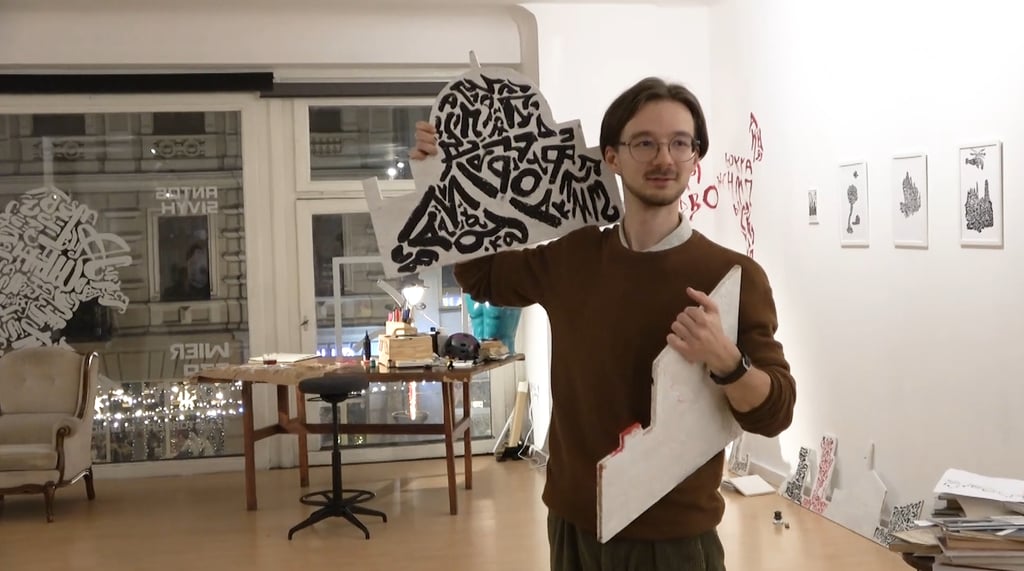
I mentioned Ginsberg. One of these title verse poems is even here on the street. Imagine walking here and seeing an entire Ginsberg poem for weeks. “A Supermarket in California” written into space. I find it beautiful.
Here is one by Jullien. This versing form was like an exam for me. Before this, I showed you spontaneous forms. They were expressive and not contained. Here I understood how to make a certain form. It was an exam in intuition. Make a form you can feel. Then build from what comes out of it.
A series on travel
We start a cycle of versingforms about travel. Here is a versing form called Epilogue. It is a combination of nine to thirteen versing forms. They were often in my mind at that time. It was a very certain period. That is why the styles change across the piece.
You find three boats on very different topics. They are built on very different poems. One is about cosmonauts and astronauts. I wrote it in front of a giant ship. Exploring space met exploring the city where that ship stood.
Another was written on packaging paper in one of my favorite restaurants in Minsk. It was long ago, in 2019, when I still lived there. Now I cannot go there. It is quite an old versing form. It was created in that place, spontaneously. It was on a poem by Viktor Zhybul. It is a poem about making a paper ship. We even have paper ships here now. They are visit cards of my video production. The poem is postmodernist. It is about the toughness of human experience.
This cycle is about travel, but also about time. Travel leaves its own handwriting on paper. The city becomes a notebook you carry.
Baudelaire and a Shakespeare sonnet
Here is another one that starts with Baudelaire. And here is the only Shakespeare versing form so far, on Sonnet 118. Classic poems meet a new movement of the hand. Classic lines enter a visual field. This is the transformation of classic and modern poems into a new form.
Sonnet 118: https://en.wikipedia.org/wiki/Sonnet_118
A piece from 2022
This versingform was released when the war started between Russia and Ukraine in 2022. Many people say it is one of the most dramatic works here. I do not know what you see in it. For me it was a very difficult time. The war started. Personal reasons weighed on me. I read this poem. It was a song by a poet. All of these emotions ran into the paper. The form had to carry that weight. Sometimes handwriting has to hold more than it can. It still tries.
Animal forms and a mirror
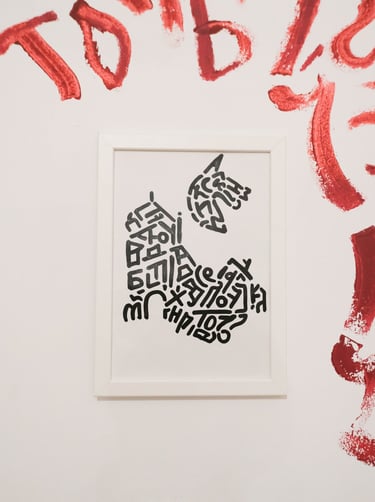
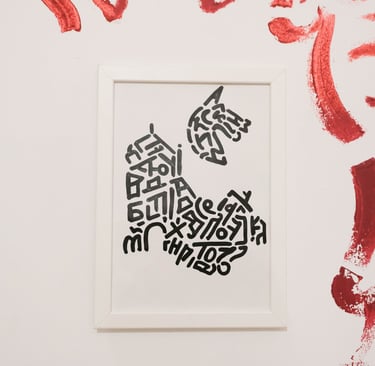
Here are more animalistic ones. One is a very short poem by the Belarusian classic poet Larisa. You can look at yourself through the poem like this. The poem becomes a mirror. The mirror becomes a letter.
Scripture as image, months of work
How do you make a testament into a visual form? It is not simple. There are many words and a lot of text. It is poetic, but not a poem in a modern sense. So I made many smaller versing forms. I worked for three months. Every word, every letter of the first chapter of John is here. You can read it. You can see it. The page became a field.
A museum of book art
We are in a museum of the art book. They are amazing people. They make many projects tied to the art of the book. Book art is its own form. They also make fonts and prints in a very traditional way. Those drawers are for storing fonts. Real physical fonts, not computer fonts. You can leave these sections of fonts and use them. The hand meets the press again. Printing is another kind of handwriting.
Book Art Museum (Łódź): https://en.wikipedia.org/wiki/Book_Art_Museum
How to read, how to use, how to try
If you want to try this, start simple. Pick a poem you love. Copy it by hand, letter by letter. Turn the page as you write. Let the text find its shape. Try one page with a dip pen. Try one with a brush. Try one on found cardboard. Put it in a library book and let someone find it. That is how public space becomes a page. That is how a page becomes a street.
Read in your language of choice. Read translations if that helps you feel it. Carry a small book for a month. Write on trains. Write near a river. Let travel change your lines. Keep your forms as a living diary. This is an artistic process anyone can enter.
If you want more process notes and simple guides, I will share them on my blog. I also post tools I use and small tutorials. You can check updates at https://sivyh.com/blog and continued notes at https://writingmate.ai/blog. These help you organize reading lists, drafts, and translation notes.
Closing and an invitation
There are many stories to explore here. I will also attach some of them after this video. Thank you for watching this. I will see you in the next video. I hope we have a cool conversation here. If you have questions, ask them. I answer every comment. We will see each other again.
This exhibition is about experimental poetry, visual calligraphy, and versing forms as daily practice. It is about poetry as visual and spatial experience. It is about handwritten text living in city space. It is public art and a set of street interventions made with care. It is also film and animation meeting book art. It is my Belarusian language and my cultural identity finding voice in letters. It is translations and travel. It is materials and time. It is classic poems transformed in a contemporary way. It is an exhibition in Poland. It is a guide to reading the city like a page.
For detailed articles on experimental poetry, visual calligraphy, versing forms, poetry as visual and spatial experience; or for art of handwritten text, some public art, street interventions, animation, book art, contemporary 21st-century poetry, cultural identity... Belarusian language, translation, city space, urban poetic installations, travel, material experimentation, interdisciplinary art, and the connections between literature, film, design, and public space, visit my blog at https://sivyh.com/blog and my YouTube at https://youtube.com/@sivyh